Topic History and Explanation
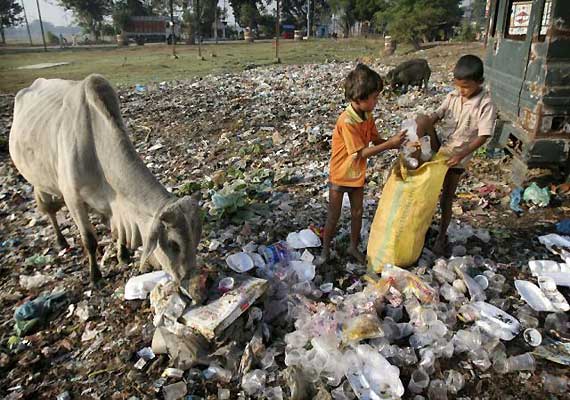
What is poverty you ask? Poverty can be
defined as "a person who has an extremely low amount of money or is extremely
poor." There are numerous amounts of people that are in the state of
poverty in India. In fact, there is an article that states "India Is Home
to More Poor People Than Anywhere Else on Earth" (http://time.com/2999550/india-home-to-most-poor-people/). This leads into
the history of poverty in India. Poverty in India begins way back before
independence. From the 19th century to the early 20th century, poverty in India
was increasing rapidly. This occurred during the colonial era.
The increase in poverty was due to the colonial government reducing finished
products being manufactured in India, including garments. The colonial
government decided to import from Britain for their innovating industry.
With that being said, the government also started to buoy to create more farms
in place of land, making exports from India to the rest of the world. The work
on these farms was grueling, yet the average income for the workers was
below the poverty line! The Bengal famine of 1943 was estimated to
kill approximately three million people from
starvation, disease, and malnutrition. Two more famines had arisen,
between 12.2 to 20.6 million people died from them. One of the famines had
occurred in 1876 - 1879, and the other in 1896 – 1898. The Bengal famine was
not an isolated event, but it was brutal. The following events display the
estimated poverty percentage of people in India: in the 1950's, the poverty
percentage was calculated to be 65%, in the 1960's, the estimate poverty
percentage was 59%, for the 1970's - 1980's, the poverty percentage was
exceeding 50%, and finally, in the 1990's, the poverty percentage was about 39%.